Every integrator is chasing speed right now: shorter project timelines, faster response times, more automation for quicker results. At some point very soon, if you haven’t already, you’re probably going to realize that the very tools helping you go faster are also stifling the “soul” of your company.
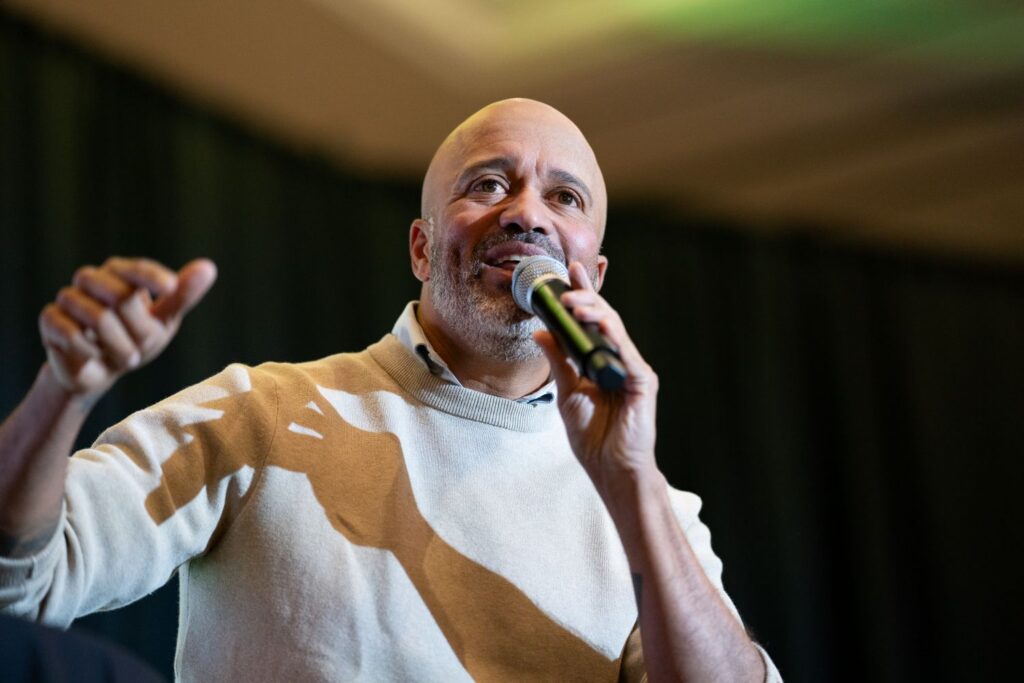
This tension between acceleration and authenticity is what Carlos Whittaker talked about at the 2026 Business & Leadership Conference (BLC), and it’s important enough to bring up again.
As the author of How to Human, Whittaker challenged BLC attendees to ask: What if the path to where we’re trying to go isn’t about speeding up … but slowing down? His blueprint for leaders is intentionally simple: Be human, see humans, free humans.
Be Human: Lower the Volume
For many leaders, the day starts and ends with a phone in hand. Seven hours a day on a phone becomes about 49 hours a week and 100 days a year. That adds up to months of living lost every year—time that could’ve been spent thinking, resting, or truly connecting.
That invisible time drain impacts personal wellbeing, of course, but it also affects the quality of your decisions, the depth of your client relationships, and the tone you set for your teams.
When leaders “lower the volume” of constant content in small ways, like parking the phone in another room at night or blocking notifications during certain hours of the day, they make space to show up calm, clear, and present. And they give their teams permission to do it, too. That behavior shapes what they believe to be normal and acceptable within the company.
See Humans: Look Beyond the Role
In many organizations, recognition stays at the surface—compliments about performance or recent wins—without acknowledging the person behind the role. Over time, that leaves people feeling invisible.
To help people feel seen, pay attention to what they pay attention to: It might be a hobby they mention, a subject they light up about, or the cause they support. When you pick up on those signals and respond, it communicates that you notice who they are, not just what they do.
Free Humans: Make Breathing Room the Norm
People are seeking freedom from constant pressure, financial strain, and feeling stuck. As a leader, it’s important to look for ways to create more breathing room, relief, or opportunity for others.
Sometimes that looks like a team rallying around a teammate in crisis by covering shifts, pooling PTO, or taking work off their plate. Other times, it shows up in how a company responds when a client’s in trouble: sending extra help onsite or using collective resources to solve a problem they couldn’t fix on their own.
For integrators, this could mean flexible scheduling or simplifying processes that constantly frustrate staff. The point is to intentionally weave acts of freedom into how your organization operates so they become part of your organization’s identity and a predictable part of the culture.
Slow Down to Protect What Matters
When so much of success is tied to going faster, it’s easy to assume that slowdowns are a threat to growth. But what if the real risk is forgetting how to be fully human while you build what’s next?
As you look at your own organization, where might you need to tap the brakes to make sure your people, culture, and “soul” can keep up with the speed of your success?