
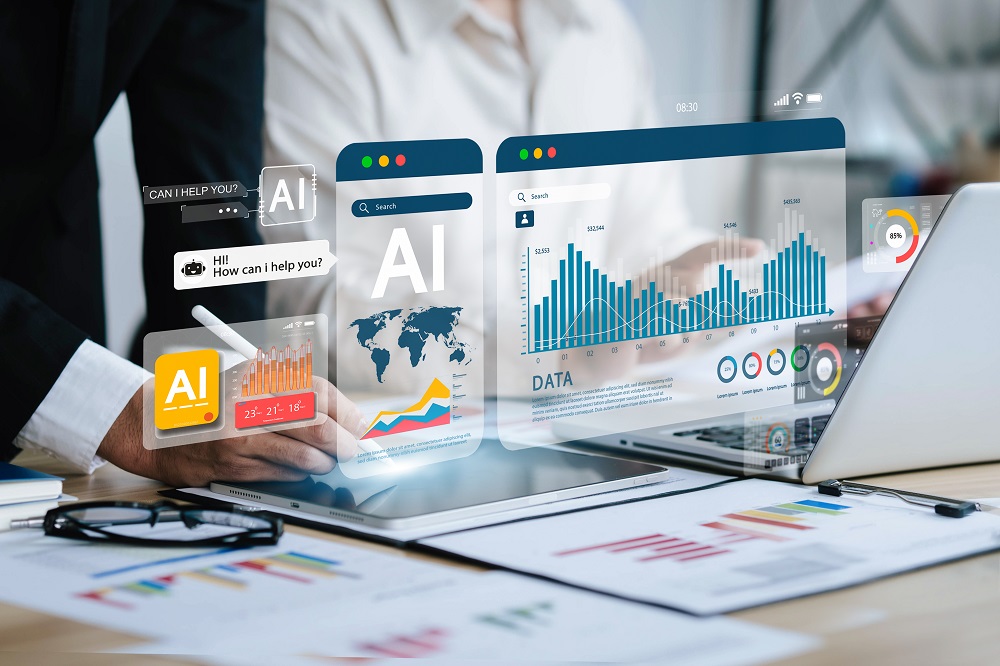
As AI and automation tools become more intelligent, your job as an integrator becomes more about “directing” and less about “doing.”
Every commercial integrator has access to the same emerging automation and AI platforms. And every industry leader has the opportunity to experiment with, refine, and apply these tools in ways that drive measurable results for their clients.
What separates integrators now isn’t new technology, but how intelligently they can use these tech tools … and how well they can explain the impact of these tools to clients when it comes to the measurable business outcomes they produce.
Too often, the terms “AI” and “automation” are used interchangeably, but they function—and deliver value—in very different ways. Understanding where one ends and the other begins is key to setting realistic expectations and building trust with clients.
The Difference Between AI and Automation Matters
Integrators are translators, bridging client expectations with technology’s potential. This can be especially difficult in today’s environment, where some manufacturers market rule-based automation tools as “AI.” It creates confusion and inflates expectations.
When the technology doesn’t perform as expected due to ambiguous claims or misunderstood capabilities, this can cause the client to lose faith in you, the integrator. It’s critical to clearly understand and explain the differences between automation and AI and articulate what each can bring to the table in terms of outcomes like:
- Reductions in energy costs
- Predictive maintenance savings
- Better workplace safety
- Improved productivity
What Is Automation?
Automation uses preprogrammed logic and predefined rules to complete repeatable, rules-based tasks (when A happens, then B follows every time). For example, an automated reporting system can be set up to pull equipment usage logs and compile monthly performance summaries without any manual input.
What Is AI?
In contrast, AI doesn’t rely on fixed rules. It performs scoped tasks and has the ability to learn and improve its work over time. It recognizes patterns, adjusts based on feedback and trends, and can make context-aware decisions. For instance, AI can analyze historical data to determine (before installation) which components are most likely to create configuration conflicts.
When Automation and AI Work as One
AI and automation can also work together. Consider a dashboard where energy data, occupancy patterns, and maintenance logs are analyzed automatically each month so results can be provided to your client.
Through automation, that data is gathered, formatted, and distributed consistently. Then, AI uses that data to interpret anomalies, pinpoint patterns, and recommend actions.
This combination is where the big opportunity lies for integrators. Pairing automation’s reliability with AI’s adaptability and analytics capabilities enables:
- Recurring revenue driven by ongoing automated data harvesting and reporting that clients can use to optimize energy usage, verify system performance, and forecast maintenance budgets
- Differentiated offerings, such as predictive maintenance, workflow optimization, and proactive performance monitoring, which clients depend on to prevent downtime, extend asset lifespan, and maintain operational continuity
- Opportunities for deeper client engagement, using insights gathered during data harvesting/reporting to spark regular and ongoing conversations about installed technology utilization, efficiency targets, technology roadmaps, and how building intelligence supports organizational goals
Establishing AI and Automation Policies to Avoid Risk
As exciting as the capabilities of AI and automation are, they also bring exposure to risk.
Several NSCA members have already encountered tough questions about data handling and liability, signaling that clients expect clear answers. For example, if a university administrator asked you who’s accountable if an AI-enabled security platform your firm installed fails to detect a threat, what would your response be?
Risk mitigation begins by defining an internal AI policy. This living document standardizes how teams evaluate tools, interact with vendors, and communicate capabilities to clients.
A strong AI policy should include these three foundational elements:
- Transparency about what the AI solution does and doesn’t do
- Data governance that defines how information is captured, processed, and retained
- Accountability and escalation paths for failures and unexpected AI behavior
Data security and ownership are equally critical in the risk conversation. Every AI-enabled system collects large amounts of information (some of it sensitive). Who owns this data? How is it stored? Your AI policy should clarify where data resides, how it’s encrypted, whether it’s stored on client servers or vendor-managed platforms, and who owns the information.
Today, the integrator that owns the data conversation owns the client relationship. You can build credibility fast by documenting and communicating these practices. You can also protect revenue streams tied to AI-enabled monitoring or analytics.
Preparing People for the Next Phase of Tech
As tools become more intelligent, your job as an integrator becomes more about “directing” and less about “doing.”
Because technicians and programmers interface with AI-enabled platforms that can generate foundational designs or diagnostic insights, their new value lies in oversight, customization, and human judgment. Your people need to be able to combine their foundational knowledge with the ability to guide, validate, and refine what AI produces.
This shift is already visible in emerging roles like prompt engineers who “coach” AI systems, and it makes communication skills as vital as networking or control logic skills.
Integrators must train employees to become AI collaborators, helping them develop fluency in prompting, interpreting system outputs, and asking the right questions when automation falls short.
Leading the Next Phase
AI and automation are reshaping how systems come together, as well as how integrators define their role in that process.
Integrators that take the time to understand how AI and automation intersect, adopt policies to manage risk, and prepare their people for new roles will be the ones that stand out.
This article was developed with insights from members of NSCA’s AI and Cyber Committee, who continue to examine how AI and automation can be responsibly integrated into the commercial integration industry.








